
Start with the movement and the parties.
Before setting rates, confirm the mode and direction: sea or air import/export, or domestic road transport. Record the route, bill-to customer, consignee, cargo description, and identifiers your operations team will need. For imports and exports, align the origin, discharge point, and final destination with the shipment documents.
Agree on the scope too. A quote should make clear which handling, freight, clearance, and delivery services are included, and which possible charges may be billed separately if they arise.
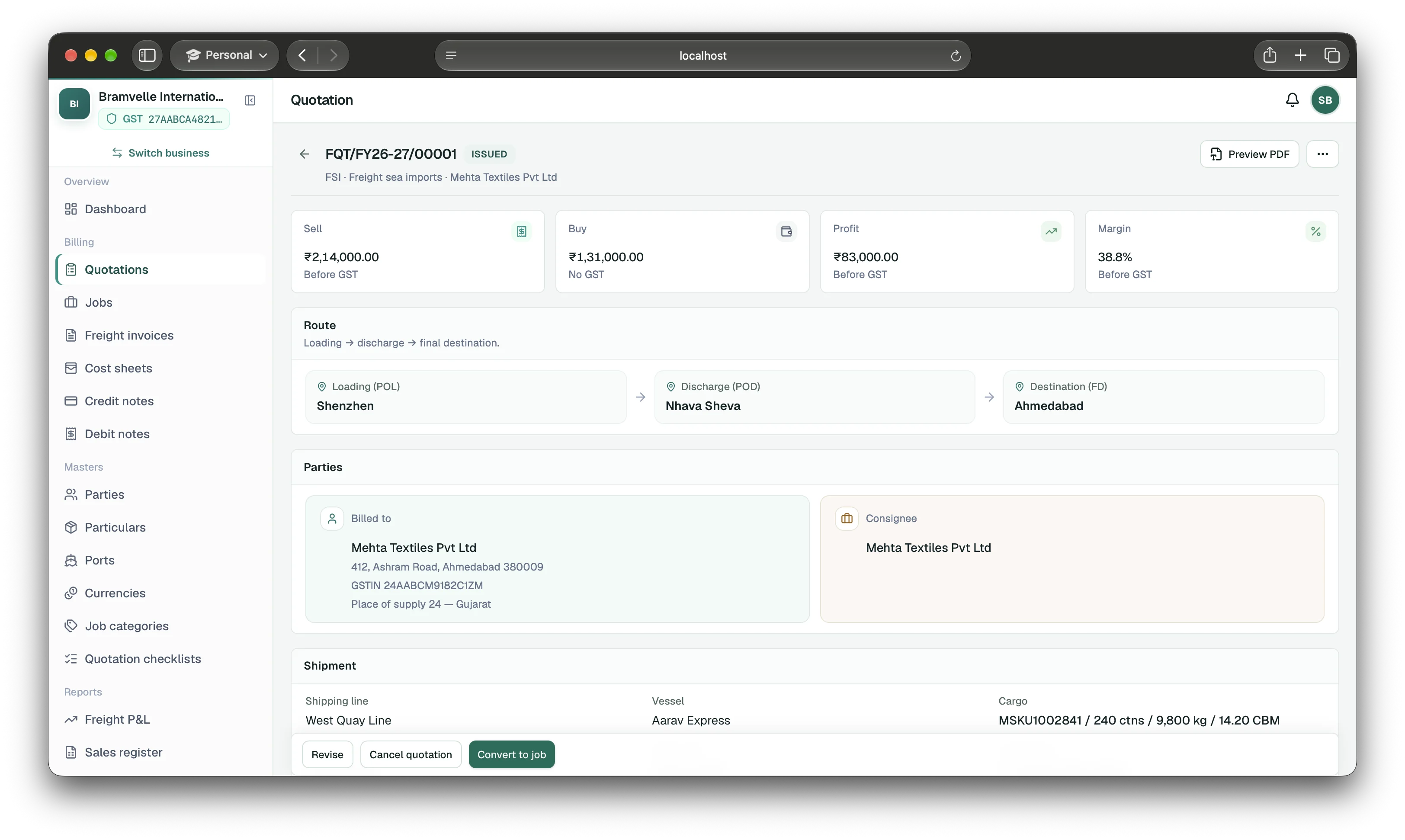
Separate what you sell from what you expect to buy.
Add customer-facing sell charges and the expected vendor buy costs as separate lines. Check quantities, units, currencies, tax treatment, and applicable SAC details before comparing the totals. If the buy side is incomplete, treat the displayed margin as a working estimate rather than a final job result.
In EasyHisab Freight, quotation Sell, Buy, Profit, and Margin are shown before GST. Internal buy figures and margin are not shown on the customer quotation PDF, so you can review the economics without putting them in the offer.
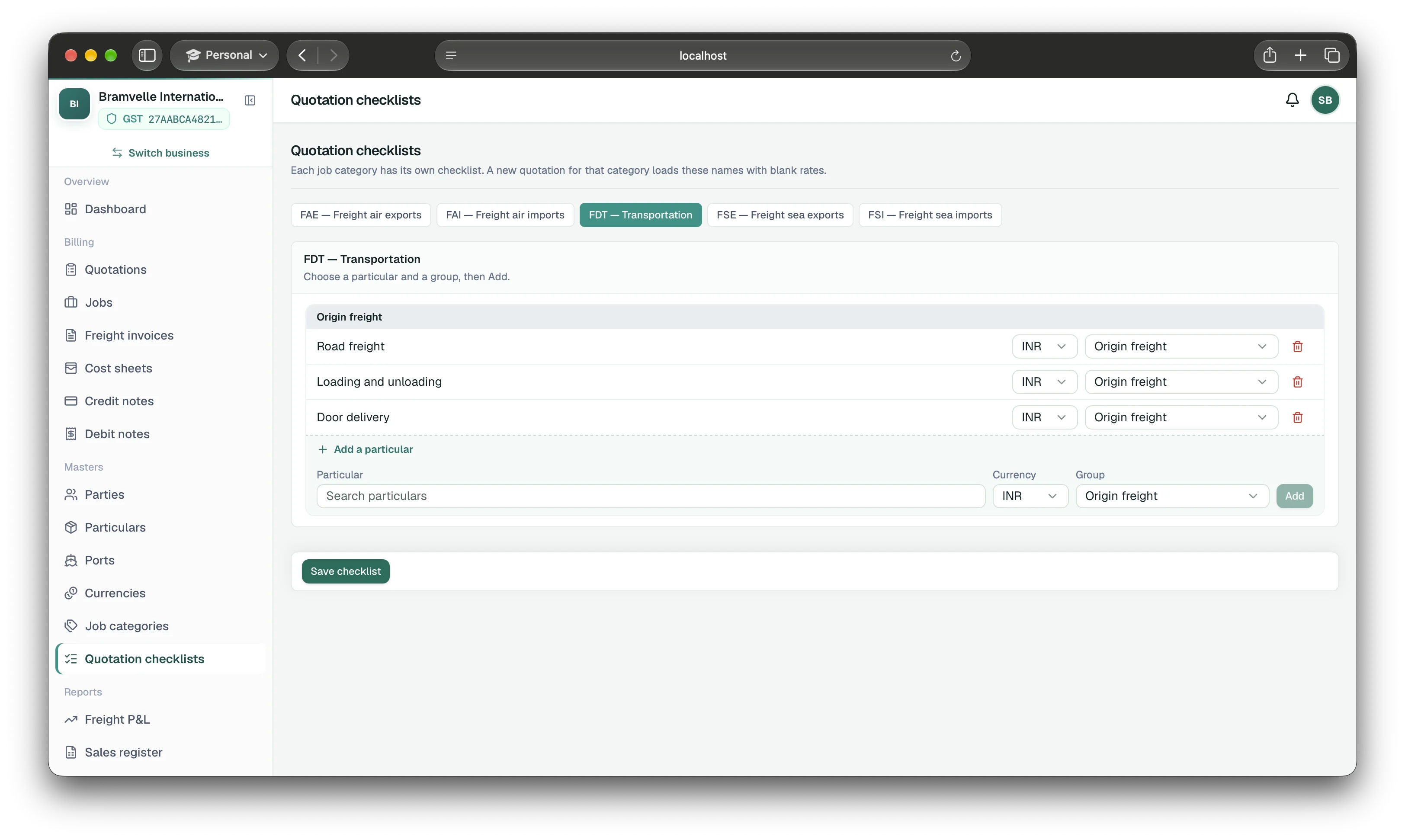
Make the quote easy to review and act on.
- Confirm the customer, route, mode, and cargo details.
- Review the sell lines and expected buy costs for omissions.
- Check tax details, currency, totals, and the validity date.
- Issue the numbered quotation, then track whether it is issued, accepted, or cancelled.
When a quotation passes its validity date, it is marked past validity. If terms have changed, revise it into a new quotation so the customer and your team can refer to the current offer.
What happens after acceptance?
Record the customer’s confirmation and convert the quotation into a job. The job carries forward the shipment and commercial planning details. Conversion does not issue a freight bill, create a vendor cost sheet, record payment, or count expected profit as actual profit. Bill the customer and record vendor costs through their job workflows.
See jobs, bills, and cost sheets